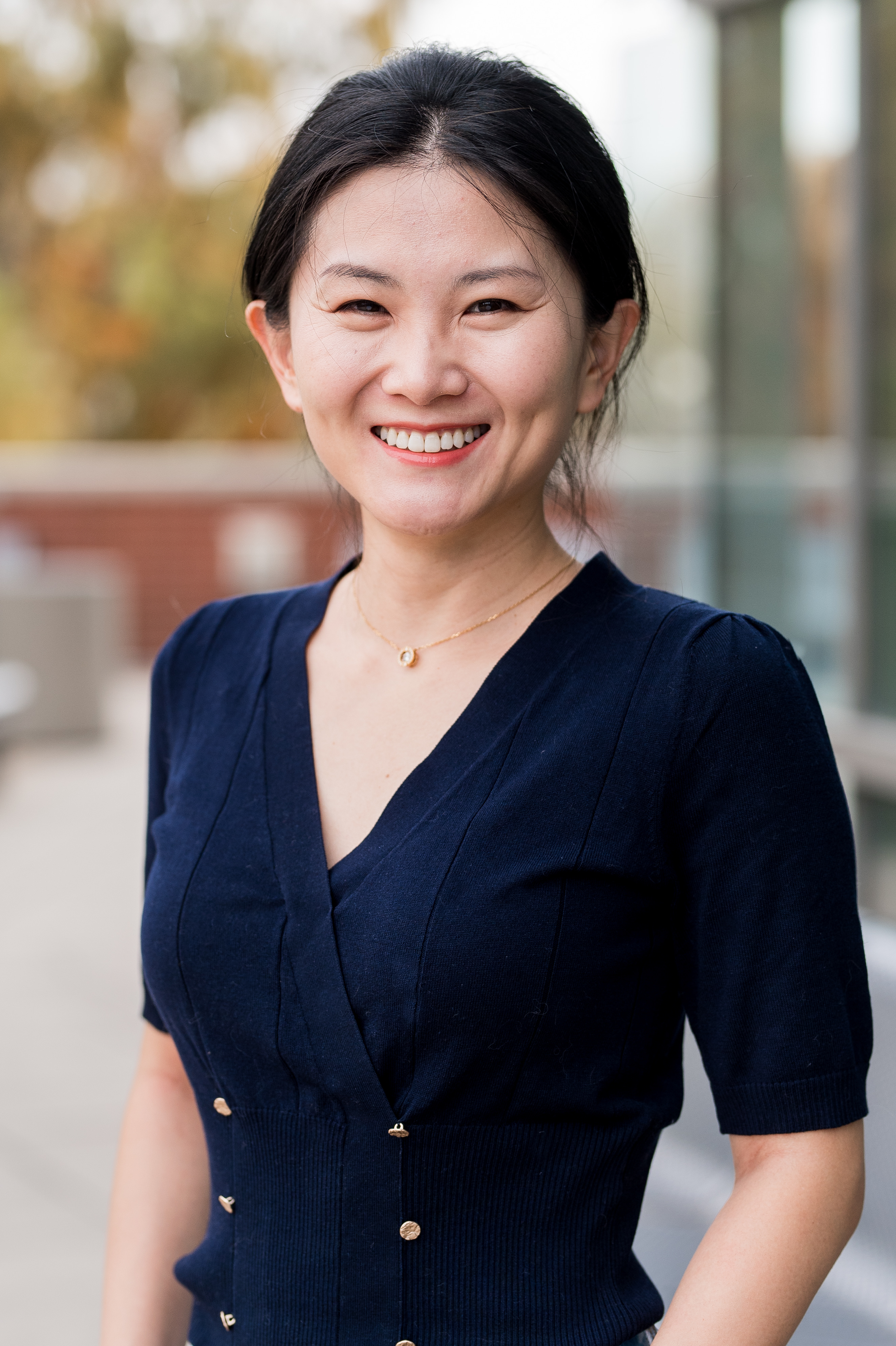
I am an Assistant Professor in the School of Information Sciences at the University of Illinois Urbana-Champaign, affiliated with the Siebel School of Computing and Data Science, the Health Care Engineering Systems Center, the Carle Illinois College of Medicine, and the National Center for Supercomputing Applications. My research centers on Medical AI. I study how AI agents can learn from human expertise and reason across the longitudinal, multimodal evidence that shapes clinical decisions. My research goal is to design human-centered medical AI systems that move beyond possessing medical knowledge to meaningfully support how clinicians, patients, and researchers think, interact, and collaborate.
Research focus
Our work is organized around four questions: how agents learn clinical expertise; how to test them in realistic settings; how they reason across time and modalities; and how they affect human decisions and communication.
- Learning from clinical expertise. Clinical expertise is more than a store of facts. We build agents that internalize guideline logic, learn reusable patterns from experience, and combine the complementary strengths of specialized medical models. Related work includes MedGuideX, GuideSkill, SEA, and MedRouter.
- Testing AI in realistic clinical settings. Medical decisions involve hidden information, extended discussion, and limited time for evaluation. We build benchmarks and simulations that preserve these conditions in MedConceal, OpenTumorBoard, Rhetorical Misalignment, LONGQAEVAL, and Does Accuracy Equal Evidence?
- Reasoning across time and modalities. A patient's story is distributed across visits, records, images, and specialist perspectives. We study how models retrieve and combine this evidence without flattening its structure through EHR-RAG, MedRouter, OpenTumorBoard, and our work connecting clinical histories to radiology workflows.
- Supporting human decisions and communication. An answer can be factually correct and still mislead or fail its reader. We study how AI changes human judgment and how medical information can be adapted without sacrificing reliability in Rhetorical Misalignment, ReLay, personalized jargon identification, and APPLS.
Prospective students and interns: I plan to recruit PhD and master's students beginning in Fall 2027 and host summer research interns at UIUC. Please use the forms on the Group page; I do not respond to recruitment inquiries by email.
Selected awards & honors
Education & training
News
| Sep 27, 2026 | Our new MedRouter preprint studies how a medical AI agent can identify and consult complementary specialist models rather than rely on a single model for every question. Across eight text and multimodal medical QA benchmarks, it improves average accuracy by 8% over the strongest routing baseline. |
|---|---|
| Aug 24, 2026 | Two of our papers have been accepted to Findings of EMNLP 2026! Does Accuracy Equal Evidence? studies reasoning faithfulness under KV-cache compression, while LONGQAEVAL develops reliable, resource-conscious evaluation methods for long-form clinical QA. Congratulations to the students and collaborators who made this work possible! 🎉 |
| Jul 28, 2026 | GuideSkill turns clinical guidelines into an external library of executable diagnostic skills that can be inspected, updated, and reused across LLMs. Guideline-derived skills outperform guideline RAG, while case-driven evolution expands their diagnostic coverage. |
| Jul 20, 2026 | A clean sweep at COLM 2026: 3/3 papers accepted! ReLay studies the benefits and risks of personalized health summaries; MedConceal tests how well models uncover and address patients’ hidden concerns; and SEA learns reusable diagnostic rules through jointly optimized reasoning and dual memory. I’ll be in San Francisco for the conference—please say hello! 🌉🎉 |
| May 26, 2026 | MedGuideX turns clinical practice guidelines into executable decision logic for LLM training, improving average clinical-reasoning accuracy by 10.28% and producing physician-preferred rationales. 🩺 |
| Apr 30, 2026 | Two papers are now published in the Journal of Biomedical Informatics: PlainQAFact introduces a sentence-aware, retrieval-augmented metric for checking factual consistency in biomedical plain-language summaries, while our crowdsourced study finds that LLM summaries can feel as clear as human-written ones yet produce worse actual comprehension. Reliable health communication must measure both factuality and what readers truly understand. 🧭 |
| Mar 29, 2026 | Our new counterfactual multi-agent framework tests how changing individual clinical findings shifts competing diagnoses, improving diagnostic accuracy and making agent reasoning more evidence-grounded on complex cases. 🔄 |
| Jan 29, 2026 | EHR-RAG combines event- and time-aware retrieval with iterative and counterfactual evidence reasoning for long-horizon health records, improving Macro-F1 by 10.76% over strong LLM baselines. 🏥 |
| Oct 12, 2025 | LONGQAEVAL shows that long-form clinical QA evaluation should mix sentence- and answer-level judgments by criterion, and that sampling a small subset of sentences can retain reliability while reducing expert annotation cost. 📋 |
| Sep 20, 2024 | Excited to share that our paper for plain language summarization evaluation has been accepted to #EMNLP2024! 🌟 I’ll be in Miami for the conference—feel free to reach out if you’d like to chat! 📩 |
| Jan 15, 2024 |  Check out my new publication: Retrieval Augmentation of Large Language Models for Lay Language Generation Check out my new publication: Retrieval Augmentation of Large Language Models for Lay Language Generation |